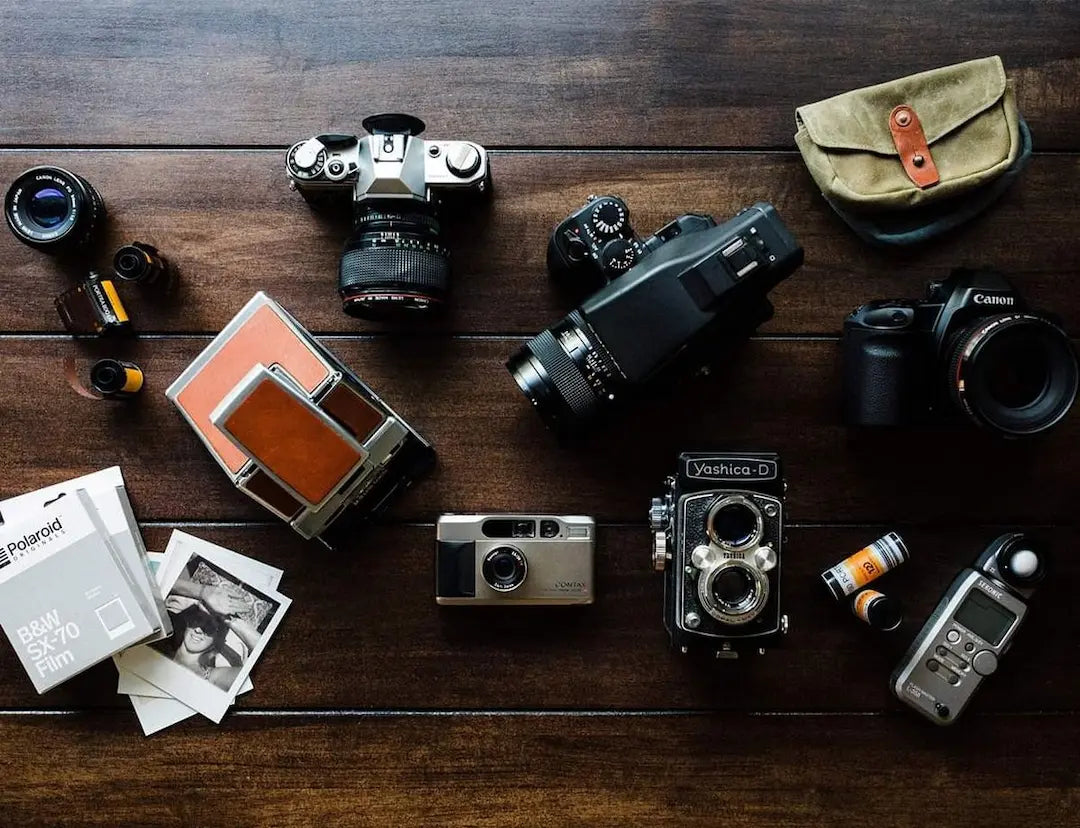

Five Things I Wish I Had Known When Starting Film Photography
Stop wasting your film: what I wish I’d known to succeed with film photography from the beginning.
Reading time: 10 minutes

Ilse Bing, 1931
Learning film photography is often full of excitement but also doubts. You load your first roll, take a few pictures, and then wait days, sometimes weeks, to see results that do not match what you had imagined. This stage is almost universal, yet rarely talked about. Film does not always reward shortcuts and understanding how a film camera works, how film reacts to light, and how your choices affect the final image is a slow process. This is exactly what makes the practice so rewarding.
Here are five lessons I wish I had known from the beginning. They cover camera choice, exposure, composition, shooting habits, and the lab—elements that, contrary to what most beginners think, have a big influence on the final images. These are not strict rules or recipes, but foundational ideas to help you progress with confidence, gain consistency, and enjoy film photography without unnecessary frustration.
1. Consistency is better than the “perfect” camera
At first, it is easy to convince yourself that a specific camera model, lens, or brand will suddenly make better images. We compare features, copy the gear of our favorite photographer, and hope that new equipment will solve our difficulties. What I wish I had understood earlier is that film rewards repetition far more than accumulating gear. It is better to know one camera inside and out than to own several without ever really mastering them. That is why I often recommend manual cameras to people who really want to improve. A camera with manual controls and limited automation forces you to think consciously about exposure, focus distance, flash use, and framing, instead of relying on automation. When you know your camera and instinctively understand which settings to use in different situations, the mechanics stop being a concern and shooting becomes the priority.
Changing gear too soon slows learning, and trying to fix your mistakes with new equipment distracts you from learning exposure, composition, and timing. A new camera may change the feeling of shooting and give the illusion of progress, but it often hides the same fundamental mistakes: bad metering, rushed composition, inconsistent habits. Progress is usually subtle and cumulative, and staying with the same camera long enough allows this gradual improvement to show.

2. For color film, slight overexposure can help
Many beginners learn too late that color negative film likes light. Film handles highlights differently from digital sensors and rarely “blows out” so abruptly. Highlights compress gently. Film has a good range for highlights and can handle more light than you might think without losing information.
It is underexposure that kills color. It produces flat, dull, or overly grainy scans, which many wrongly blame on the lab. Thin negatives force the scanner to boost weak signals, which increases grain, reduces color separation, and lowers tonal richness.
A useful reminder is that the ISO on the film box is not absolute. Exposing your film slightly more than suggested can give a more balanced result, such as shooting Kodak Portra 400 at 200 or 320 ISO. This can sometimes produce richer tones and cleaner shadows. It is something to test to find your preferences.
In short, when in doubt, adding exposure almost always improves color, detail, and dynamic range because slightly overexposed images are usually recoverable while underexposed ones usually are not.

Credit: Analogue.ams
3. Composition matters more than film choice
Many beginners focus on film choice as if it alone defines a style. Portra, Gold, Ultramax, Ektar. Which one is best? The truth is that film only enhances a photograph that is already strong in composition. Good light, clean framing, and thoughtful subject placement matter far more than the color palette of the film. Films are the seasoning, not the main course.
Film choice can become a recognizable marker of your work and, combined with regular practice, contribute to your aesthetic signature. But it is not enough to define your style. Mood, texture, contrast, and color support your photographic voice without replacing the way you see the world or compose your images. Your visual identity also comes from how you observe, what you choose to include or exclude, and how you structure the scene. The type of film should complement your practice by enhancing your vision, not replacing it.

By William Eggleston

By William Eggleston
4. You do not have to photograph everything
At first, every moment seems worth capturing and we burn through rolls hoping that quantity will produce quality. Today, this approach is expensive and unnecessary. Learning to slow down, observe the scene, compose carefully, and be satisfied with one or two good images accelerates progress in a way that volume alone cannot.
This restraint is a discipline that film especially requires today and it will serve you well in the long run. Your vision improves faster when you shoot less and take time to observe before pressing the shutter. This practice trains more intentional seeing. It is valuable for your artistic work but also for your wellbeing in a fast and saturated world. Not everything needs to be documented. Letting some scenes live only in memory strengthens your intention when you do photograph. Intentional shooting increases your success and makes rolls consistent. Instead of a series of snapshots, your films become chapters. You learn to value your choices, anticipate, and cherish the photos you make rather than those you could have taken.

5. The lab strongly shapes the final result
Your scans are not always a neutral translation of your negatives. They are an interpretation shaped by chemistry, the scanner, color profiles, and the person operating the machine. Two different labs can make the same negative look as if two different photographers made it. Of course, poor exposure explains many problems beginners blame on scans, but once your exposures are consistent, lab differences become very important.
Labs have styles. Some create punchy and high contrast results, others prefer softer, almost pastel tones. Changing labs can create confusion, and if your results change with every roll, it becomes impossible to track your progress. A bad scan is often not a bad negative, but an interpretation that does not match your intention. Finding a lab that understands and respects your vision is essential. Custom work takes time and often costs more. Working with labs that accept feedback, offer custom profiles, and manually adjust scans to match the photographer’s vision is worth seeking.
This approach is used at Club 35, where every scan receives special attention to the preferences and intention of each photographer. This process takes time and real human effort, but it ensures consistent results and produces images that reflect your vision instead of applying a standardized machine look. Treat your lab as a collaborator. Find one that supports the aesthetic you want and stay loyal to it. Consistent processing reveals your real style.

Left: photographed by Serena Lutton on medium format, right: photographed by Marion Colombani on 35mm — both developed and scanned by Club 35.
These five lessons point to one main idea. Film forces you to slow down. The camera, the film, and the lab matter but they are secondary to the deliberate practice of attention. Knowing one camera builds muscle memory. Generous exposure preserves colors and detail. Composition gives meaning far more than chemistry. A trusted lab translates your intention into consistent results.
Film photography requires patience, acceptance of small mistakes, and the understanding that improvement is gradual. If you accept its limits instead of fighting them, you will discover that the goal is not just to make beautiful images but to refine the way you see and choose. These lasting skills, independent of trends or equipment, are what make a photograph truly matter.